Countertops Decoded: Quartz vs. Quartzite vs. Marble vs. Granite
How Material Durability, Porosity, and Maintenance Realities Guide the Right Stone Selection for Your Wasatch Front Kitchen
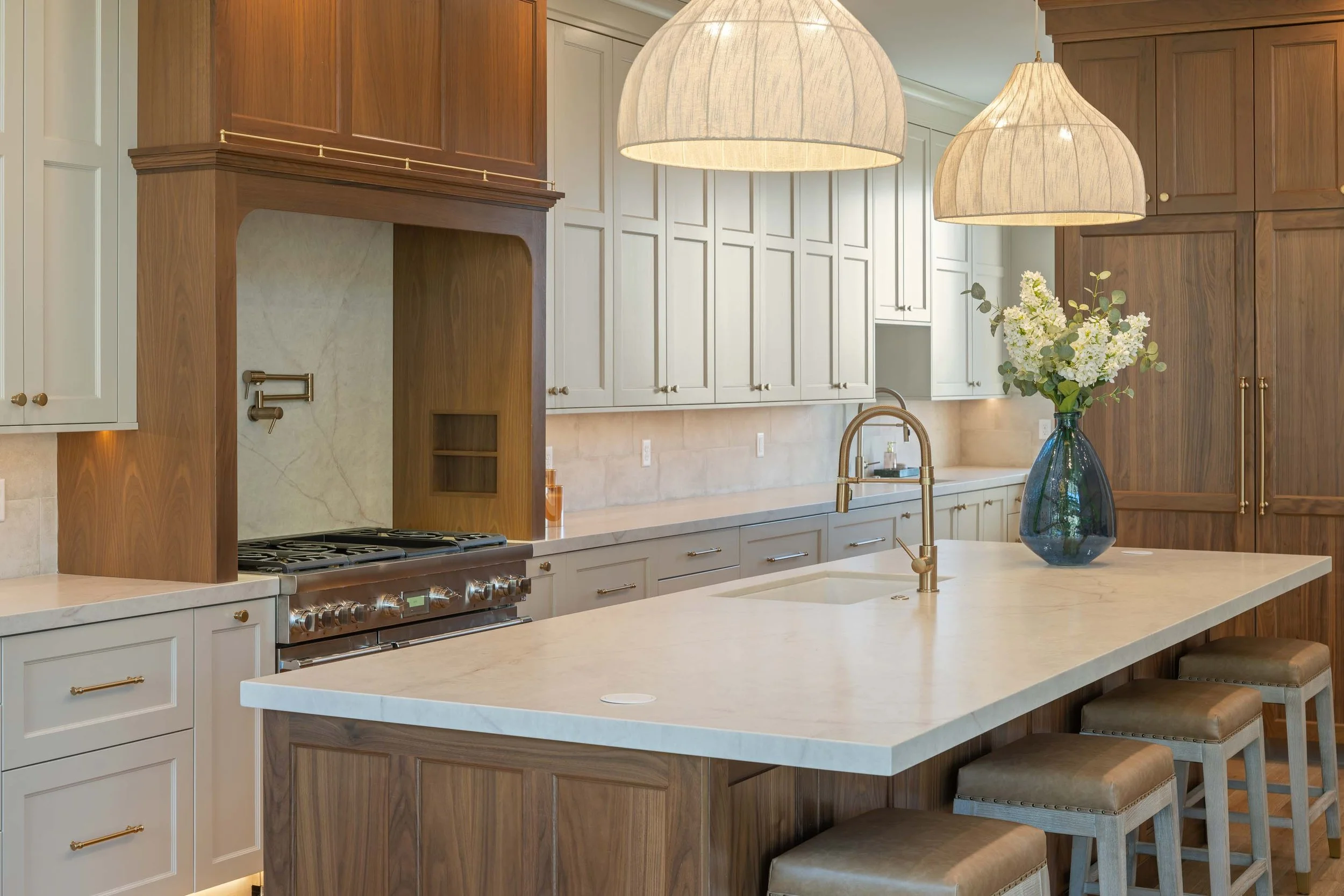
Low-maintenance luxury meets organic warmth: 3.0cm MSI Q Premium Natural Quartz (Solitaj) in a tactile brushed finish anchors both the perimeter countertops and central island in our 2026 Utah Valley Parade home — Deerfield Estate at The Cove.
Selecting kitchen countertops is one of the most exciting visual milestones in a custom build, but it is also where homeowners face the steepest learning curve. Between subtle mineral veining and showroom terminology, materials that look remarkably alike on the surface perform completely differently under the demands of daily life.
Clients often ask whether engineered quartz and natural quartzite are the same material, whether marble works for a busy household, or whether granite still has a place in modern design.
To help you choose the right surface for your kitchen island and perimeter workspaces, here is a practical breakdown of the four most common countertop materials:
Engineered Quartz: Low-Maintenance Uniformity
Made with about 90-93% crushed natural quartz crystals bound with polymer resins and pigments, engineered quartz is a manufactured surface built for modern durability.
Advantages: Because it is non-porous, quartz never requires sealing. It resists staining from red wine, citrus, and cooking oils effortlessly, making it exceptionally sanitary and easy to clean. Advanced manufacturing also allows for clean, consistent veining patterns across multiple slabs.
Considerations: The polymer resins that make quartz stain-resistant are sensitive to extreme heat. Setting a hot Dutch oven directly onto quartz can cause thermal shock or leave permanent resin burns. It is best suited for indoor applications, as prolonged UV exposure can discolor the resin.
Natural Quartzite: Uncompromising Hardness and Organic Depth
Quartzite is a 100% natural metamorphic rock that formed from sandstone after intense heat and pressure deep within the earth. Popular varieties like Taj Mahal have become modern custom favorites because they deliver marble's soft, creamy elegance with superior structural resilience.
Advantages: Natural quartzite is even harder than granite, making it exceptionally scratch-resistant. It withstands direct heat far better than engineered quartz and offers authentic, multidimensional depth that synthetic materials can't replicate.
Considerations: Because it is quarried stone, quartzite has microscopic pores and requires a quality penetrating sealer during fabrication and periodic resealing over the home's life. Its extreme density also makes it harder to cut, so experienced stone fabricators are needed to achieve clean mitered edges and sink cutouts.
Classic Marble: Timeless Patina and Organic Elegance
Quarried primarily from limestone, natural marble remains the gold standard for Old-World luxury, celebrated for its buttery feel, cool working surface, and expressive veining.
Advantages: Nothing replicates genuine marble's natural luminescence and prestige. For dedicated bakers, marble remains the ideal dough-rolling surface because it naturally stays cooler than ambient room temperature.
Considerations: Marble is a softer, calciferous stone that is sensitive to acid. Lemons, vinegar, and tomato sauce will chemically react with the calcium carbonate, creating dull patches known as "etching," even when sealed. In custom homes, marble works best for homeowners who appreciate an evolving, lived-in patina, or in secondary spaces like primary bathroom vanities, fireplace mantels, or formal wet bars.
Natural Granite: The Proven Workhorse
Granite is an igneous rock formed from cooling magma, composed of quartz, feldspar, and various natural minerals that give it its signature granular appearance.
Advantages: Granite is virtually impervious to heat, highly scratch-resistant, and one of the most durable natural surfaces available. With modern finishes like leathering or honing, granite takes on a soft, tactile texture and reduces glare.
Considerations: While extremely durable, granite requires routine sealing to prevent moisture and oil absorption. Its natural patterns tend to feature dense crystalline flecks rather than wide, flowing marble veins, so slab matching across large waterfall islands is an important aesthetic consideration.
Quick Comparison Guide
-
Material Type
Man-made compositeHeat Resistance
Moderate (sensitive to direct heat)Stain Resistance
High (Non-porous)Requires Sealing?
NoBest Suited For
High-activity kitchens, laundry rooms, busy households -
Material Type
Natural metamorphic stoneHeat Resistance
HighStain Resistance
High (when sealed)Requires Sealing?
Yes (periodic)Best Suited For
Statement kitchen islands, high-end culinary workspaces -
Material Type
Natural metamorphic stoneHeat Resistance
ModerateStain Resistance
Low to Moderate (prone to etching)Requires Sealing?
Yes (frequent)Best Suited For
Baking stations, primary bathroom suites, butler pantries -
Material Type
Natural igneous rockHeat Resistance
Very HighStain Resistance
Moderate to High (when sealed)Requires Sealing?
Yes (periodic)Best Suited For
Heavy-use cooktop counters, outdoor kitchens, prep spaces
The Showroom Strategy: Bringing It All Together
Never choose stone based on a 4-inch sample chip or a digital rendering. Natural slabs display sweeping variation across their length, and undertones shift noticeably under Northern Utah’s natural sunlight.
At Gordon Milar Construction, our process ensures selections work seamlessly with your broader architecture:
Bring Cabinet Samples to the Slab Yard: Finalize your cabinet box profiles and door stains first, then take physical wood cuts directly to our stone fabrication partners.
Inspect the Full Slab in Person: Walk the slab yard to select your exact lot, noting where dynamic veins will land across cooktop cuts, sink bowls, and waterfall edges.
Layer in Adjacent Finishes: Place your actual hardwood or tile flooring cuts and grout chips against the slab under natural daylight before signing off on templating.
By matching material science to how your household actually preps, cooks, and gathers, you ensure your countertops remain as functional on day 3,000 as they are on move-in day.