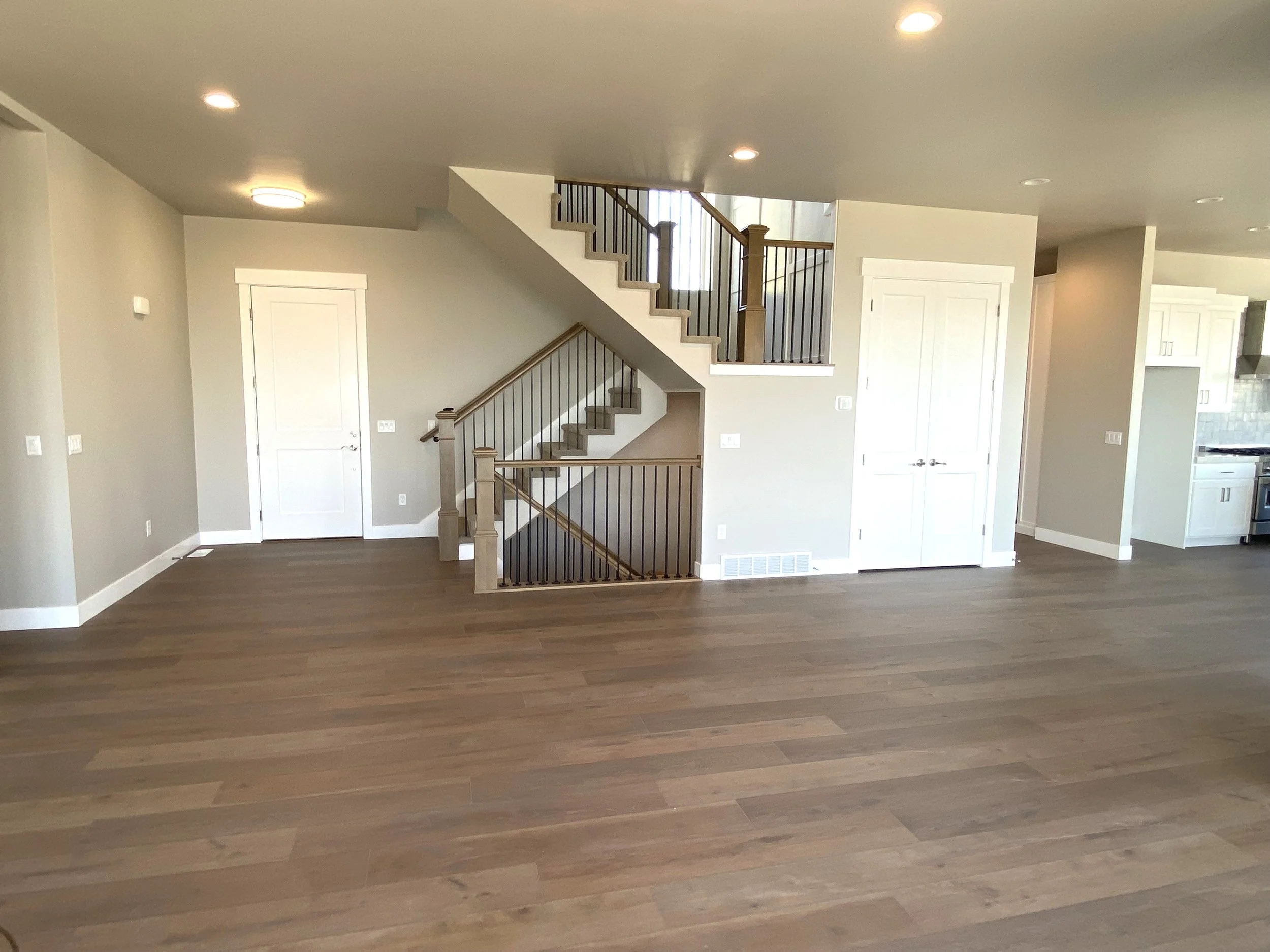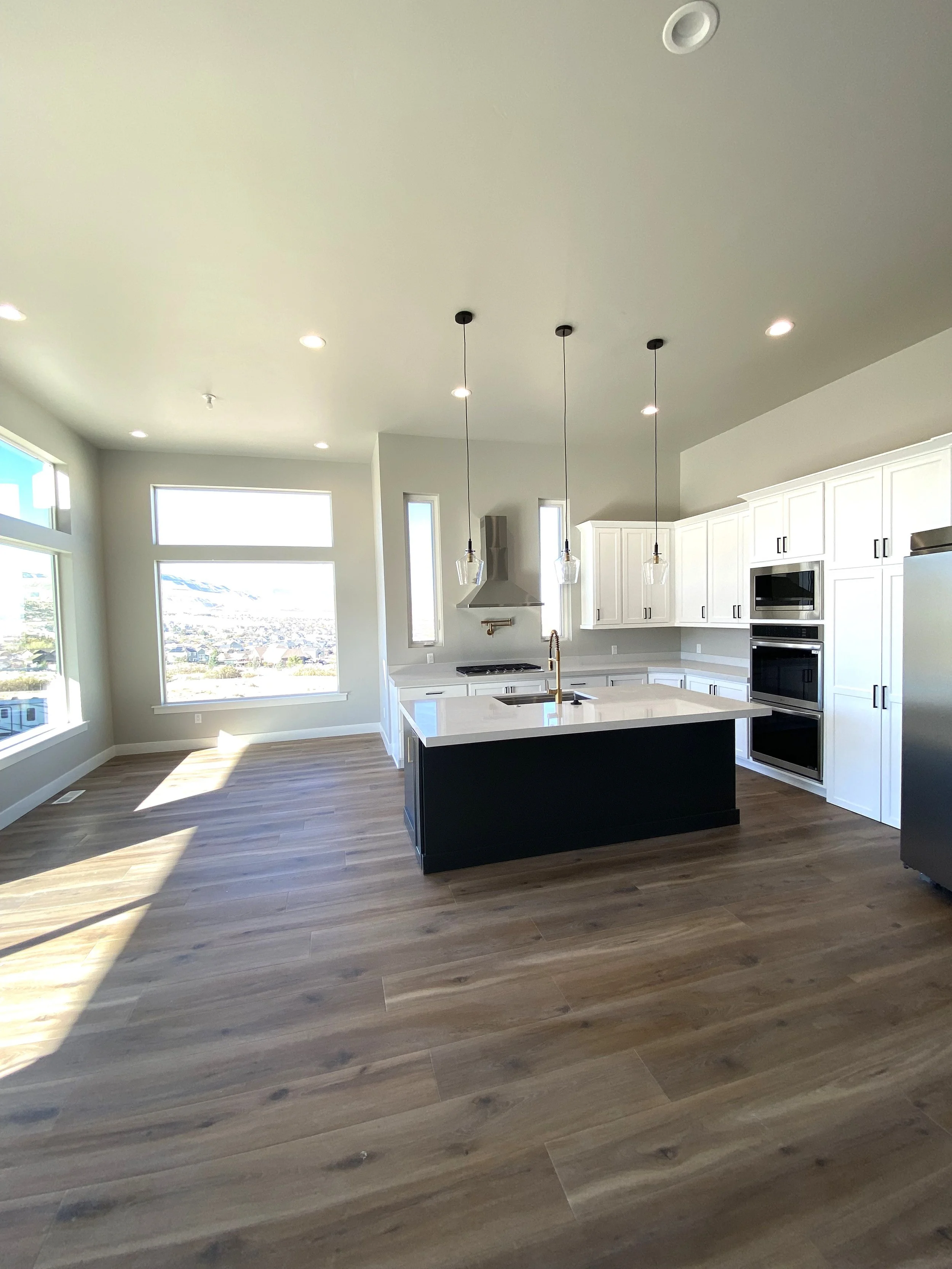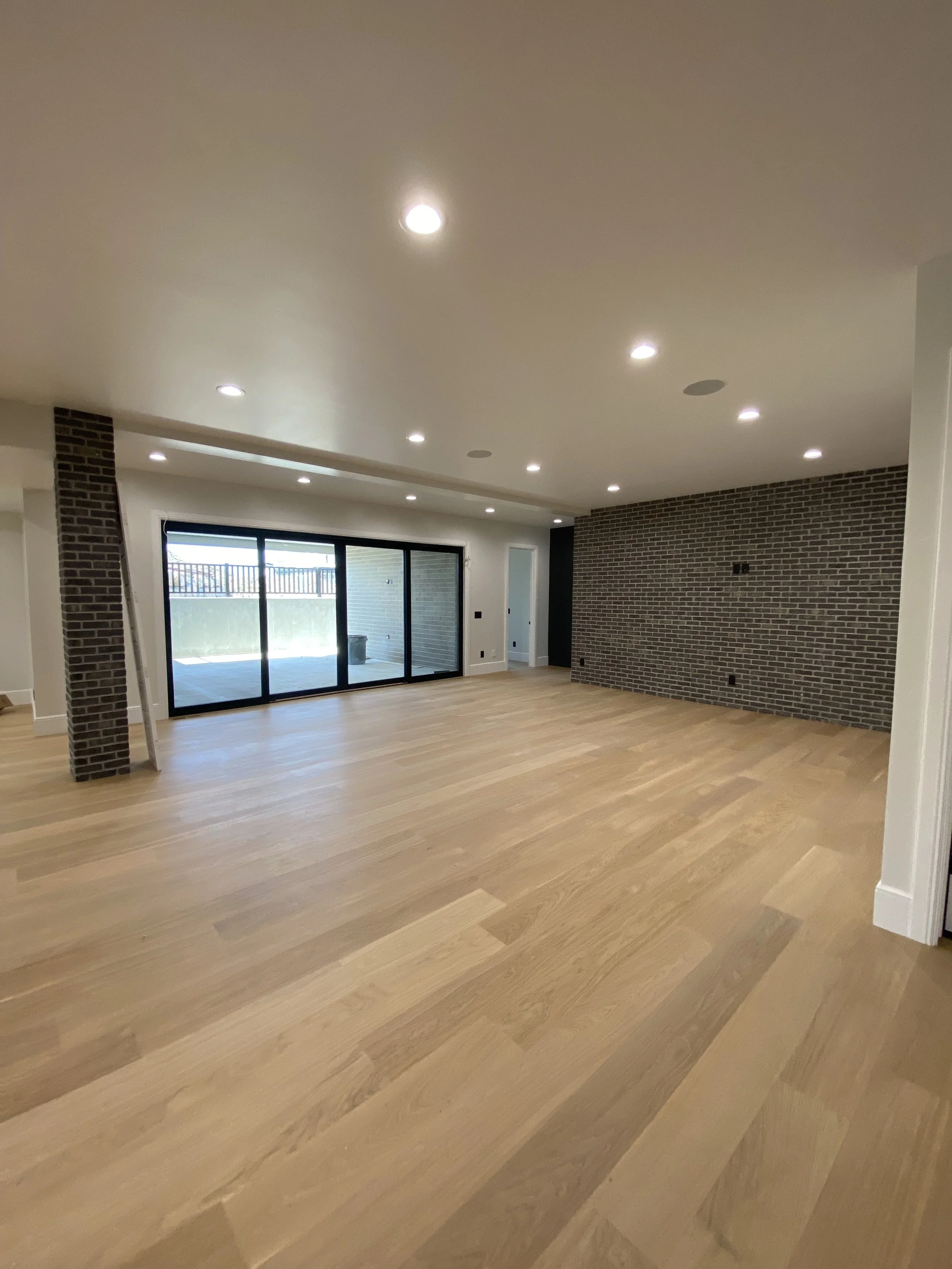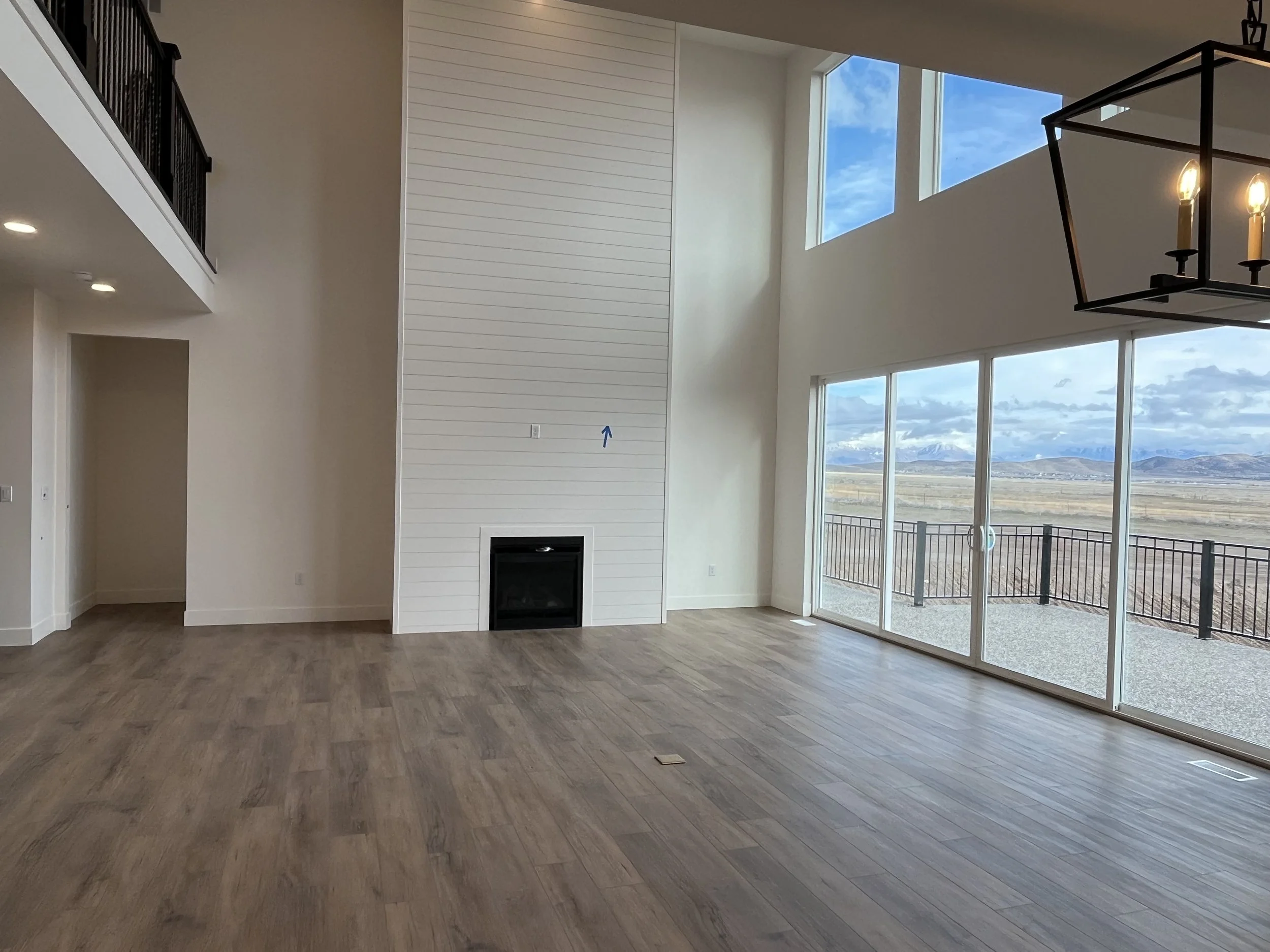
How Material Science, High-Altitude Climate Realities, and Lifestyle Demands Guide the Right Flooring Surface for Your Wasatch Front Home
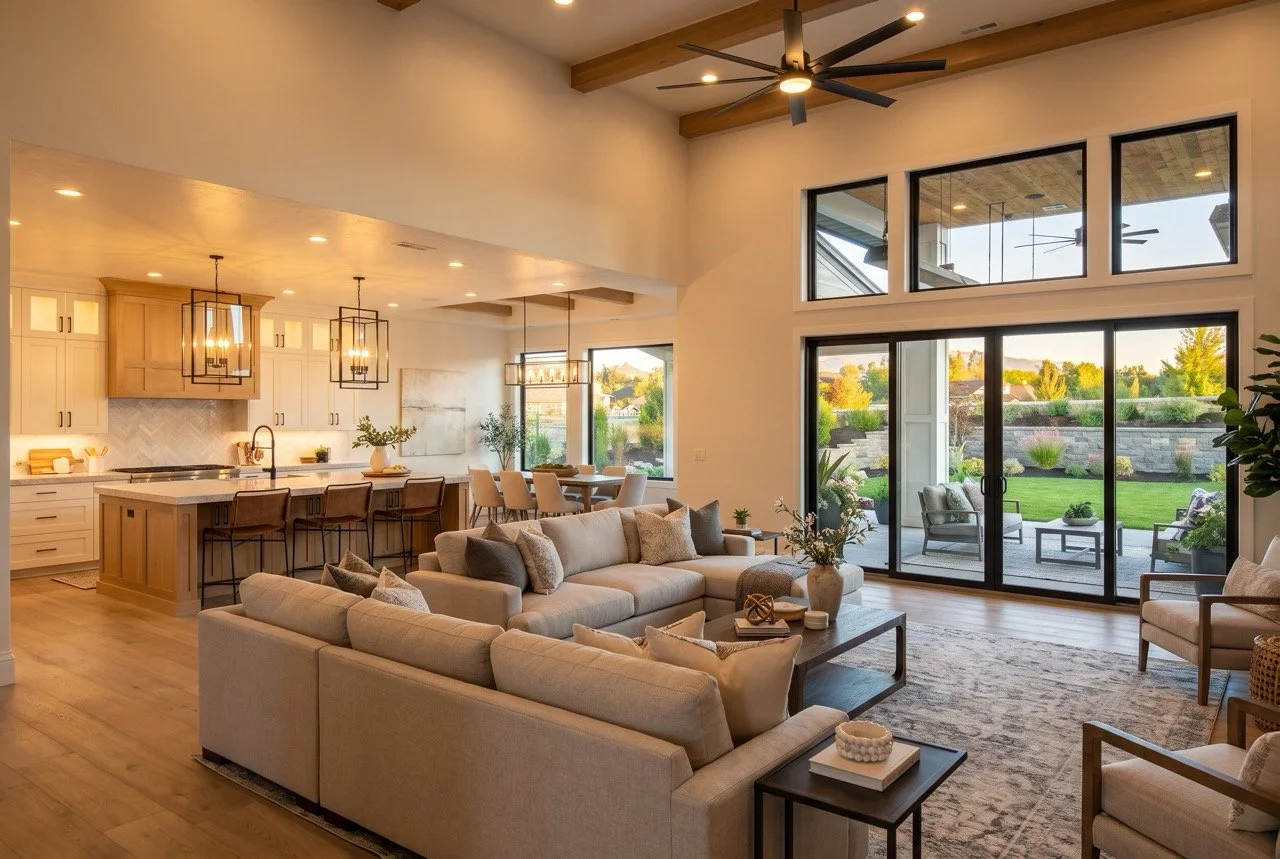
When curating the interior finishes for a custom build, flooring is almost always your largest visual and tactile investment. Spanning continuous living areas, kitchens, mudrooms, and hallways, it anchors your cabinetry, wall tones, and stone selections.
Yet for custom homebuyers along the Wasatch Front, standing in a flooring showroom often brings a flood of questions. Is real wood durable enough for snowy boots and active dogs? Will engineered hardwood survive Utah’s arid winter furnace cycles? Does luxury vinyl plank look out of place in a high-end estate? And how does modern laminate stack up?
To cut through marketing jargon and showroom overwhelm, here is a practical look at the performance, material construction, and ideal use cases for the three most common hard-surface flooring materials.
1. Engineered Hardwood: Authentic Warmth and Structural Stability
Unlike traditional 3/4-inch solid hardwood, engineered hardwood features a genuine hardwood veneer (typically white oak, hickory, or walnut) fused over a cross-laminated core of high-density plywood or multi-ply hardwood.
The Advantages: Nothing matches the authentic organic depth, natural grain variation, and premium acoustic feel of real timber underfoot. Because the multi-ply core layers run perpendicular to one another, engineered hardwood significantly minimizes natural wood expansion and contraction. It adds undeniable appraisal value and architectural prestige to primary main-floor living areas.
The Wasatch Reality: Northern Utah's high altitude and dry winter heat pull moisture from interior air. In a typical home heated without supplemental humidity, solid timber can dry out, shrink, and cup. While engineered hardwood handles dry climates far better than solid planks, whole-home humidification (ideally maintaining 30% to 50% relative humidity) is still recommended to protect wide-plank wood from dry-cupping or surface checks. It is also susceptible to surface gouging from large pets or standing water pooling under wet winter gear.
Best Suited For: Great rooms, gourmet kitchens, dining spaces, executive offices, and primary bedroom suites.
2. Luxury Vinyl Plank (LVP): Bulletproof, Waterproof Resilience
Luxury Vinyl Plank is a synthetic, multi-layered flooring composed of a rigid core (typically Stone Polymer Composite, or SPC), a high-resolution printed photographic film, and a heavy-duty polyurethane clear wear layer often infused with ceramic beads.
The Advantages: LVP is 100% waterproof. You can soak it in a puddle of melted snow without swelling, warping, or delaminating. Its dense wear layer provides unmatched resistance against dog claws, dropped cast-iron skillets, and abrasive dirt track-in. High-end commercial-grade LVPs also feature registered-in-register (EIR) embossed textures that match the grain pattern to the print, closing the visual gap with real wood.
The Wasatch Reality: While practically indestructible, LVP feels slightly cooler and denser underfoot than real wood. In vast, open-concept great rooms with soaring two-story ceilings, large expanses of click-lock vinyl can sometimes produce a hollow acoustic reflection unless paired with a high-density acoustic underlayment.
Best Suited For: Active ski mudrooms, walk-out basements, laundry suites, craft rooms, and multi-generational suites where pets, children, and snowmelt are daily realities.
3. Modern Rigid Laminate: Premium Scratch Resistance at Scale
Far removed from the hollow, plastic-looking laminate floors of the 1990s, today's advanced laminate flooring features an ultra-dense, water-resistant High-Density Fiberboard (HDF) core topped by photographic paper and an aluminum oxide resin wear surface.
The Advantages: Modern high-end laminate boasts an exceptionally high AC (Abrasion Criteria) durability rating, making it more scratch-resistant than both real wood and standard residential vinyl wear layers. Modern manufacturing yields tight micro-beveled edges, realistic matte textures, and plank lengths that closely mimic custom millwork at an accessible investment level.
The Wasatch Reality: While modern top-tier laminates offer topical water resistance (often rated for 24 to 72 hours against spills), they are water-resistant, not fully waterproof. If standing water seeps through unsealed perimeter expansion gaps and sits along the raw fiberboard backing, swelling can occur.
Best Suited For: Upper-level bedroom corridors, children's bonus rooms, home theaters, or high-traffic play zones where superior scratch resistance is paramount.
Material Comparison at a Glance
-
Material Construction: Genuine hardwood veneer layered over a cross-laminated, multi-ply core
Moisture Resistance: Moderate; vulnerable to prolonged standing water or pooling snowmelt
Scratch Resistance: Moderate; develops natural surface patina, minor indentations, and character over time
Climate Stability: High; cross-ply core mitigates seasonal shrinking and expanding far better than solid timber in dry Wasatch air
Aesthetic Value: Maximum luxury, organic grain depth, and long-term appraisal prestige
Ideal Zone: Great rooms, formal dining areas, executive home offices, and primary suites
-
Material Construction: Heavy-duty synthetic construction with a rigid Stone Polymer Composite (SPC) core and clear protective wear layer
Moisture Resistance: 100% waterproof; impervious to standing water and melting snow
Scratch Resistance: High; engineered clear wear layer provides superior defense against dog claws, heavy footwear, and active traffic
Climate Stability: Excellent; completely dimensionally stable across wide indoor humidity and temperature swings
Aesthetic Value: Clean, contemporary visuals with realistic registered-embossed textures
Ideal Zone: Ski mudrooms, walk-out basements, utility corridors, laundry suites, and kids' play zones
-
Material Construction: Dense High-Density Fiberboard (HDF) core topped with photographic design paper and an aluminum oxide resin wear shield
Moisture Resistance: Topical water resistance; shields against daily spills (rated 24–72 hours), but vulnerable if moisture seeps into raw perimeter backing
Scratch Resistance: Very high; aluminum oxide wear layer delivers maximum abrasion and dent resistance
Climate Stability: Good; requires proper perimeter expansion spacing during installation to handle shifting seasons
Aesthetic Value: Warm, crisp, and realistic wood aesthetic with authentic micro-beveled plank edges
Ideal Zone: Upper-level bedroom hallways, bonus game rooms, home theaters, and dedicated children's spaces
The Designer's Roadmap: Pairing Materials for Real Life
You don’t have to settle on a single hard-surface material for your entire floor plan. In luxury custom building along the Wasatch Front, the most successful designs blend surfaces intentionally based on zone traffic and moisture exposure:
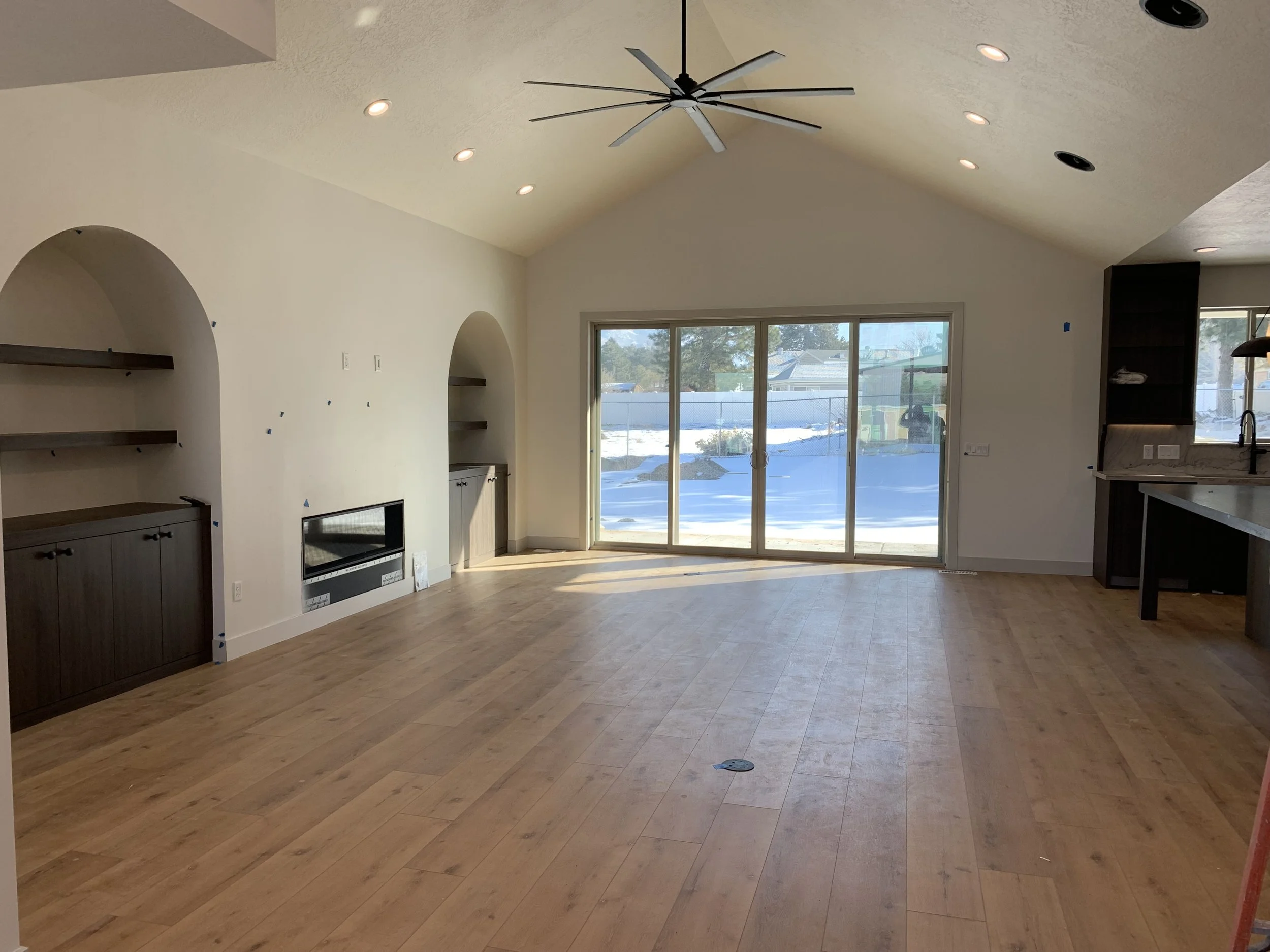
Anchor the Main Level with Engineered Wood: Install wide-plank engineered hardwood across your open-concept great room, formal dining, and kitchen to anchor your primary gathering spaces in organic warmth and authentic texture.
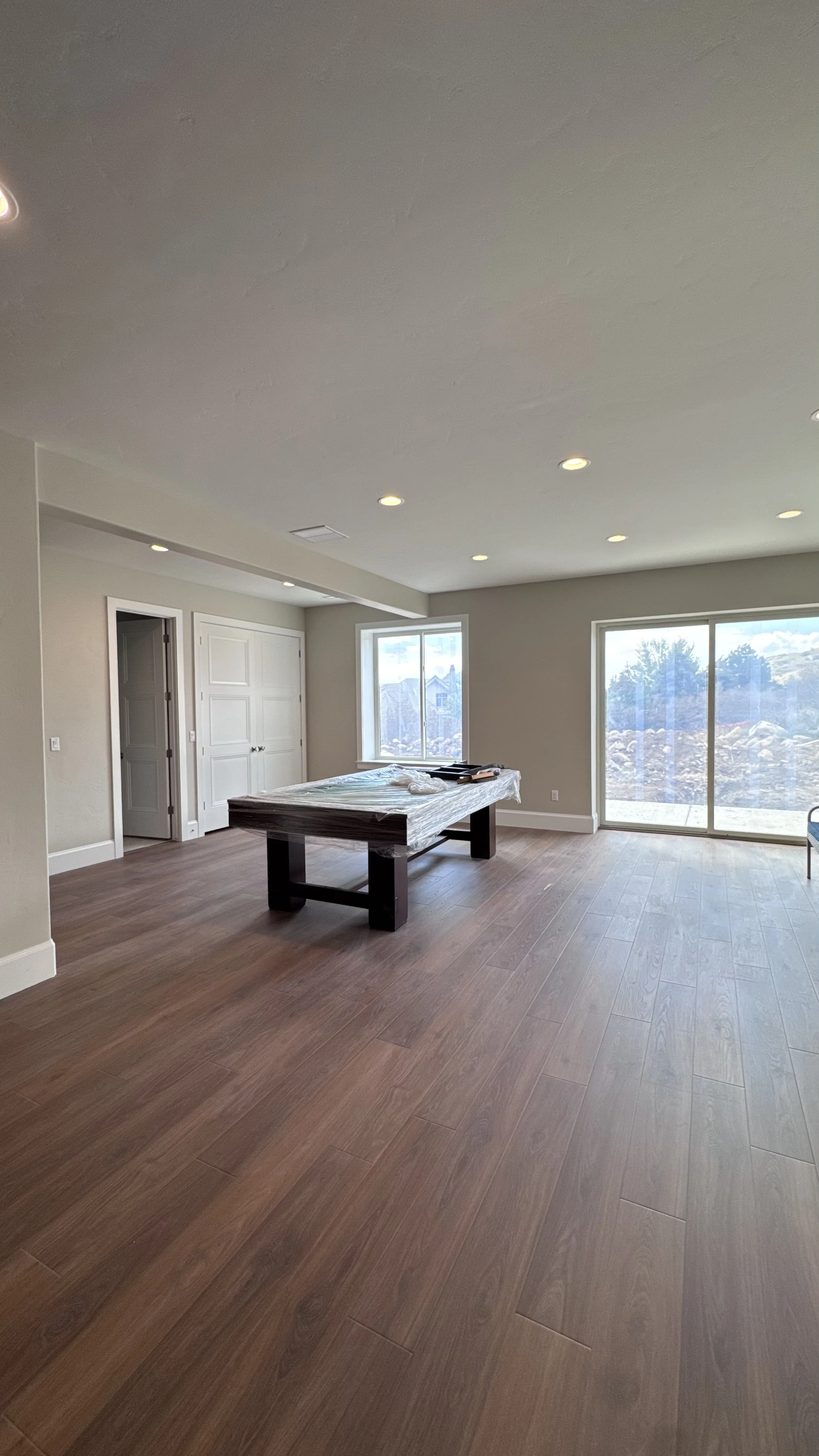
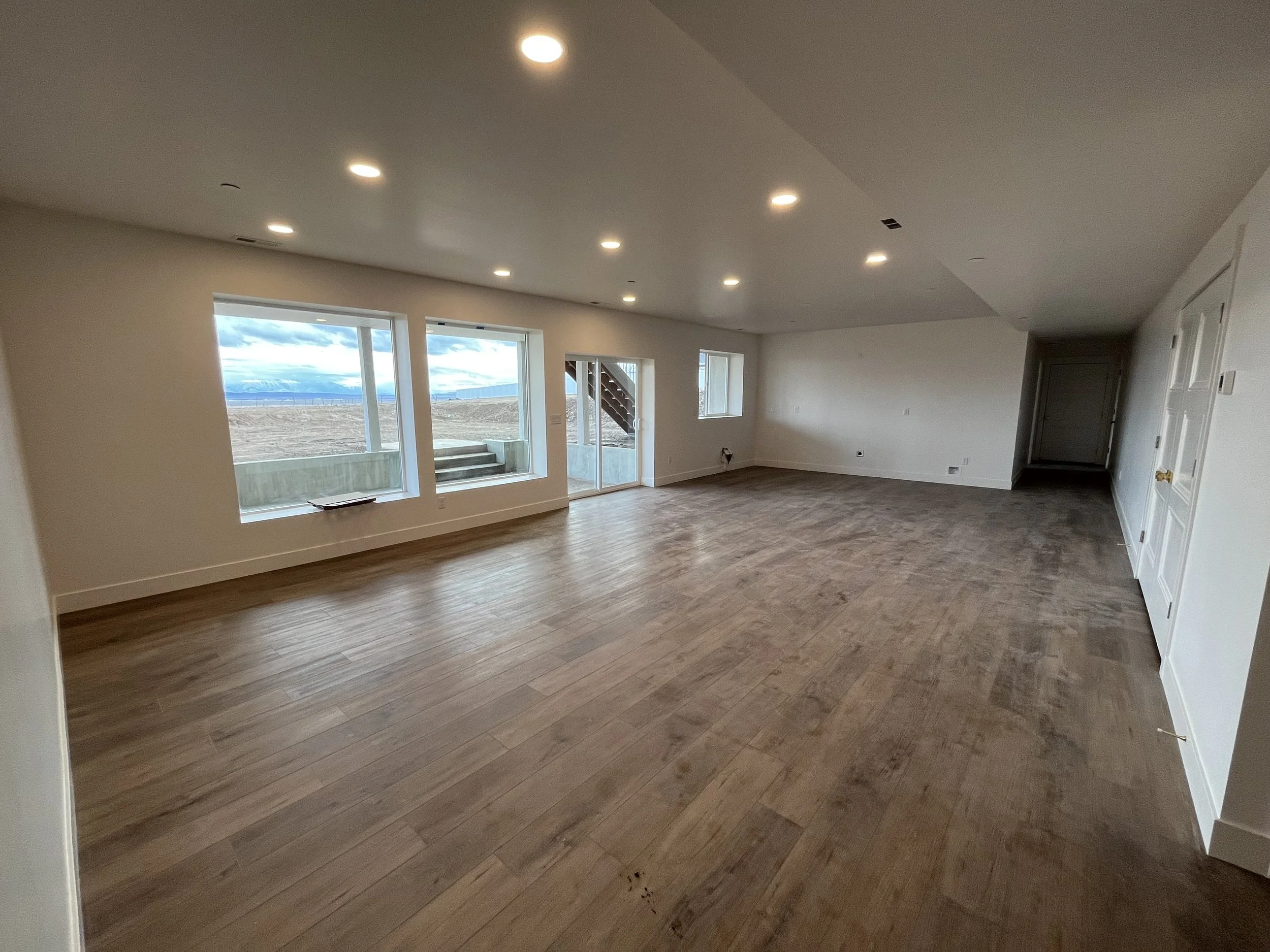
Transition Strategically in Mudrooms and Basements: Switch to a high-end luxury vinyl plank or natural-look tile in secondary entrances, ski prep spaces, and walk-out basements where winter snowmelt, pets, and outdoor equipment congregate.
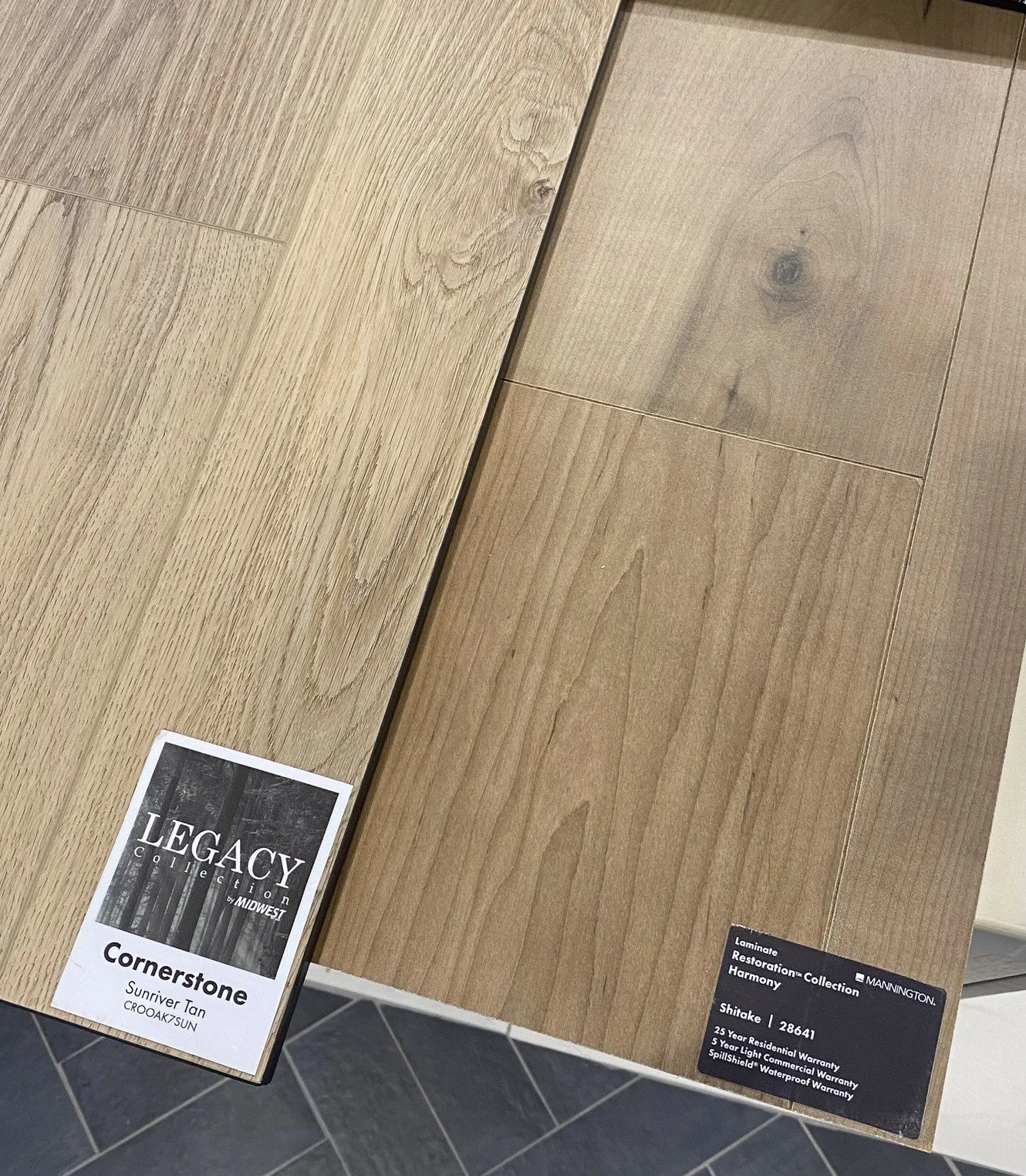
Bring Physical Samples into Natural Light: Never select flooring from a digital catalog or a 4-inch sample chip alone. Bring full-length floor sample planks into the sunlight and compare them with cabinet doors and countertop cuts to evaluate undertones in authentic Northern Utah daylight.
Planning a custom build along the Wasatch Front? Contact our team today to explore architectural design, floor plans, and curated interior selections.